- Marty-Tree
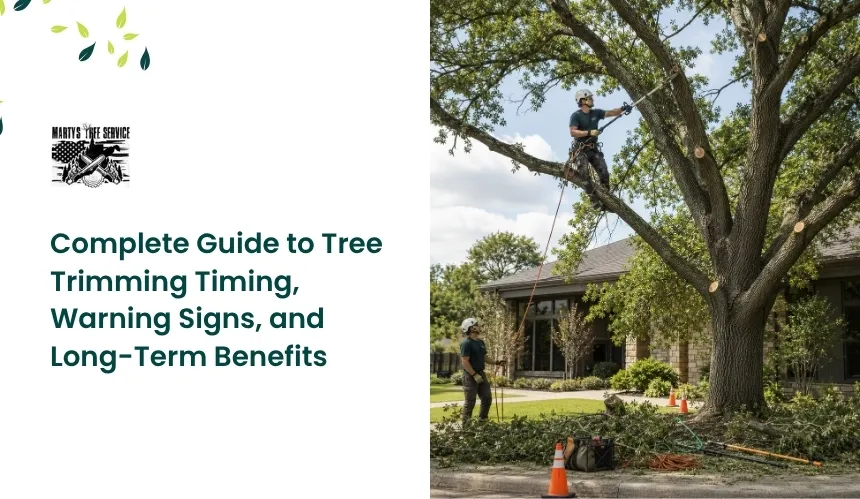
Complete Guide to Tree Trimming Timing, Warning Signs, and Long-Term Benefits
Trees require regular maintenance to remain healthy, structurally balanced, and safe throughout changing seasonal conditions. However, many property owners are unsure when trimming should be scheduled or which warning signs indicate that professional attention is necessary. Proper tree trimming helps control growth, reduce safety hazards, and support long-term landscape health.
According to the International Society of Arboriculture, strategic pruning and trimming can significantly improve tree stability while reducing the likelihood of branch failure during storms. Regular maintenance also helps prevent disease spread, improves airflow through the canopy, and encourages stronger branch development over time.
This blog explains when trees should be trimmed, the most common warning signs that indicate maintenance is needed, and the long-term benefits of proper trimming practices. It also covers how seasonal timing affects tree care and why professional trimming helps protect both trees and the surrounding property.
1. How Tree Trimming Timing Affects Overall Tree Performance
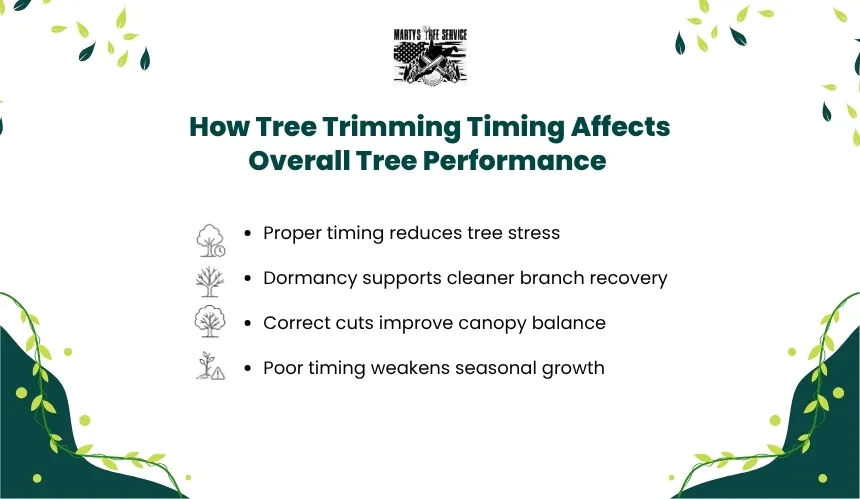
Trees respond differently to trimming depending on their growth cycle, dormancy stage, and environmental exposure. Proper timing helps cuts heal more efficiently while reducing unnecessary stress that can interfere with nutrient distribution and seasonal development.
Trimming at the correct time also improves branch spacing, canopy balance, and structural control without encouraging weak regrowth. Seasonal timing becomes especially important for mature trees that experience heavy branch loads or rapid growth during warmer months.
Why dormant-season trimming is commonly recommended
Many tree species recover more effectively when trimming is performed during dormancy because energy reserves are stored within the root system rather than active canopy growth. Reduced foliage also makes it easier to identify weak limbs, crossing branches, and structural defects throughout the tree.
Dormant-season trimming may also lower exposure to insects and fungal pathogens that become more active during warmer temperatures. Controlled pruning during this stage helps encourage healthier spring growth while minimizing unnecessary stress on the tree.
How can improper timing weaken tree growth?
Trimming during periods of excessive heat, rapid growth, or environmental stress can reduce a tree’s ability to recover efficiently. Fresh cuts may remain exposed longer, increasing vulnerability to pests, disease spread, and moisture-related damage.
Over-pruning at the wrong time can also stimulate weak sprout growth that lacks strong structural attachment. In some cases, improper seasonal trimming may disrupt flowering cycles, fruit production, or natural canopy development patterns.
2. Signs That Indicate Your Trees Should Be Trimmed
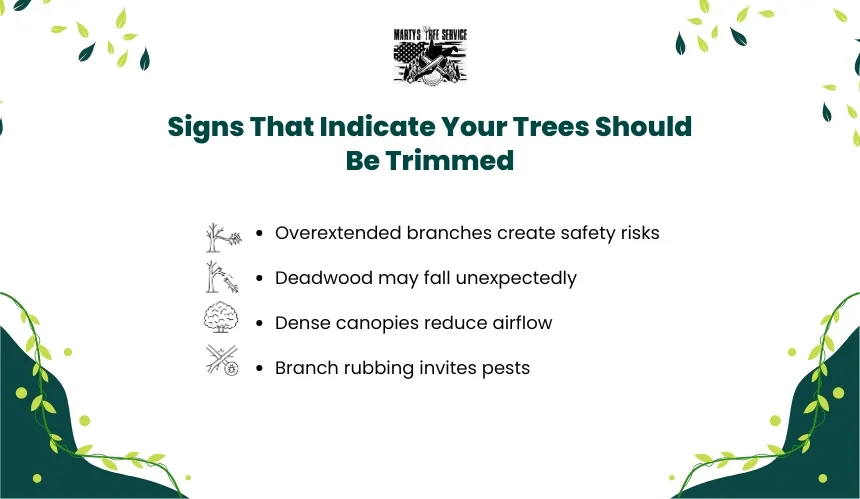
Trees usually show visible signs when trimming becomes necessary, but many property owners overlook these changes until branches become hazardous or growth becomes difficult to control. Identifying these signs early helps prevent structural stress, canopy imbalance, and storm-related damage.
Regular trimming also helps maintain healthier branch spacing and improves the overall appearance of the landscape. When excessive growth or damaged limbs are ignored for long periods, trees may become more vulnerable to breakage, disease spread, and uneven development.
Some of the most common signs that indicate trimming is needed include:
- Overextended Branches: Limbs growing too close to roofs, fences, or utility lines can create safety risks and increase the chance of storm damage.
- Deadwood Formation: Dry or brittle branches with little to no leaf growth may eventually fall and damage nearby structures or vehicles.
- Canopy Overcrowding: Thick internal growth can reduce airflow and sunlight penetration, creating conditions that support fungal development and moisture retention.
- Uneven Growth Patterns: Trees with heavily weighted sides may experience balance issues that increase structural stress during strong winds or heavy rain.
- Blocked Visibility: Low or excessive branch growth may interfere with sidewalks, driveways, signage, or visibility around the property.
- Branch Rubbing: Crossing limbs can scrape bark surfaces repeatedly, creating openings that allow pests and disease organisms to enter the tree.
3. Benefits of Trimming Trees at the Right Time
Properly timed tree trimming supports healthier growth patterns and helps trees recover more efficiently after branches are removed. Seasonal timing affects how quickly cuts heal, how much stress the tree experiences, and how effectively nutrients continue moving through the canopy and root system.
Trimming at the appropriate stage of growth also reduces unnecessary strain caused by excessive branch weight or uncontrolled canopy expansion. Well-maintained trees generally develop stronger branch structures and are less likely to experience breakage during storms or rapid seasonal growth periods.
Some of the key benefits of timely tree trimming include:
- Improved Structural Balance: Removing weak or overloaded limbs helps distribute weight more evenly across the canopy and reduces branch stress.
- Better Air Circulation: Strategic trimming opens dense canopy areas and improves airflow, helping reduce excess moisture buildup within the tree.
- Healthier Growth Development: Controlled pruning encourages stronger branch formation and supports more organized long-term canopy growth patterns.
- Reduced Storm Damage Risks: Trees with balanced branch distribution are generally more resistant to high winds and heavy seasonal weather conditions.
- Enhanced Property Appearance: Proper trimming helps maintain cleaner tree shapes and improves the overall visual balance of the landscape.
- Lower Disease Exposure: Removing damaged or infected branches early can help limit the spread of decay, fungi, and pest-related damage.
4. Why Timely Tree Trimming Helps Prevent Expensive Damage
Delaying tree trimming can gradually increase the risk of structural problems across both the landscape and nearby property features. Overgrown branches, weak limbs, and dense canopy growth often place unnecessary stress on trees, especially during storms, heavy rainfall, or periods of strong wind activity.
Routine trimming helps control excessive growth before it creates larger safety concerns or costly repair situations. Preventive maintenance is usually far less expensive than emergency removals, roof repairs, utility damage restoration, or cleanup caused by fallen branches.
How neglected trimming can lead to property damage
Branches that grow too close to structures may eventually scrape roofing materials, siding, windows, or fencing during windy conditions. Heavy limbs hanging over driveways, walkways, or parking areas can also become dangerous if structural weakness develops within the branch system.
Over time, excessive canopy weight may increase the likelihood of branch failure during seasonal storms. Trees with poor branch distribution or overcrowded growth patterns are often more vulnerable to splitting, cracking, and storm-related structural damage.
Why preventive maintenance reduces long-term repair costs
Timely trimming helps identify hidden structural problems before they become severe enough to require major corrective work. During routine maintenance, professionals may detect early signs of decay, pest activity, diseased limbs, or branch instability that could otherwise remain unnoticed.
Consistent maintenance also improves canopy balance and reduces unnecessary stress across the tree structure. Healthier, properly managed trees are generally more resistant to environmental damage, helping property owners avoid unexpected repair expenses and emergency service costs over time.
Frequently Asked Questions
Can trimming trees too often affect their growth?
Excessive trimming can remove too much foliage at once, reducing the tree’s ability to produce energy efficiently through photosynthesis. Over-trimming may also encourage weak regrowth and place additional stress on the canopy, especially during active growing seasons.
Do different tree species require different trimming schedules?
Tree species grow at different rates and respond differently to seasonal pruning. Some trees benefit from annual maintenance, while others may only require trimming every few years, depending on growth habits, branch density, and environmental exposure.
Is tree trimming necessary even if the branches are not damaged?
Healthy-looking trees may still require trimming to maintain balanced growth and prevent overcrowding within the canopy. Preventive maintenance helps improve branch spacing, airflow, and structural development before visible problems begin appearing.
Can improper trimming affect flowering or fruit production?
Incorrect trimming techniques or poor timing may interfere with flowering cycles and reduce fruit production in certain species. Some trees develop buds months before blooming seasons, making timing especially important for preserving healthy seasonal growth.
Why do trimmed trees sometimes grow back faster afterward?
Trees often respond to branch removal by redirecting stored energy toward new shoot development. If trimming is too aggressive, rapid regrowth may occur in weaker forms that are less structurally stable than naturally developed branches.
Should newly planted trees be trimmed immediately?
Young trees usually require minimal trimming during early establishment unless damaged or poorly positioned branches are present. Excessive pruning too soon can slow root development and interfere with healthy structural formation during initial growth stages.