- Marty-Tree
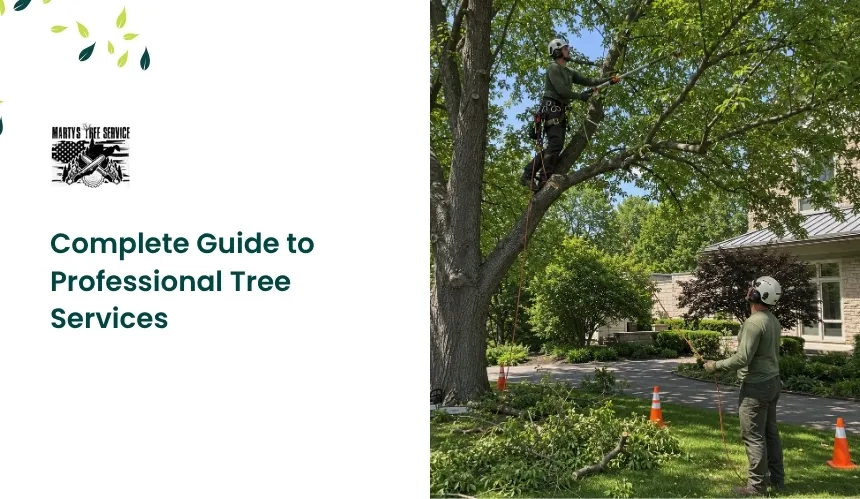
Complete Guide to Professional Tree Services
Trees improve shade coverage, environmental balance, and the overall appearance of residential and commercial landscapes. However, maintaining healthy trees requires ongoing attention because weather exposure, aging branches, root instability, and disease can gradually weaken structural integrity over time. Professional tree services help manage these risks while supporting safer and healthier outdoor spaces.
According to the USDA Forest Service, mature trees can increase property value by up to 15% while also reducing cooling costs and improving urban air quality. At the same time, damaged or poorly maintained trees remain one of the leading causes of storm-related property damage across residential properties each year.
This blog explains why professional tree care is important, how to identify warning signs of tree damage, and which services help preserve long-term tree health. It also covers seasonal maintenance considerations and what property owners should understand before hiring a tree care professional.
1. Why Professional Tree Care Is Important for Long-Term Landscape Health
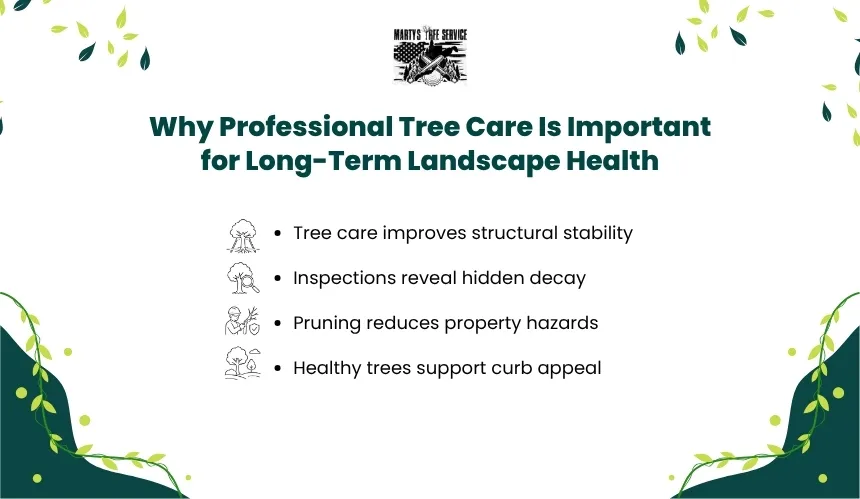
Trees are constantly affected by environmental stress, seasonal weather changes, moisture levels, and soil conditions. Without proper maintenance, branches may become unstable, root systems can weaken, and hidden decay may continue spreading internally until visible damage appears across the landscape.
Professional tree care focuses on preventive maintenance that improves structural stability and reduces long-term property risks. Regular inspections, controlled pruning, and health evaluations help trees grow more evenly while minimizing hazards near roofs, sidewalks, driveways, and utility lines.
Healthy trees also contribute to stronger curb appeal and better environmental performance. Well-maintained landscapes create a cleaner appearance while supporting shade coverage, erosion control, airflow improvement, and healthier surrounding vegetation.
2. Common Signs That Trees Need Professional Attention
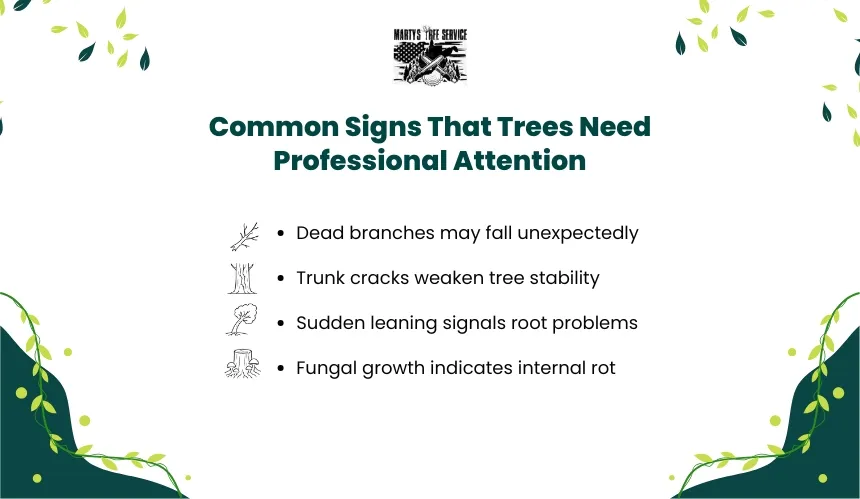
Many tree-related problems begin gradually and remain unnoticed until severe damage develops. Internal decay, pest infestations, and structural weaknesses can slowly reduce stability, especially during storms or periods of rapid seasonal growth.
Recognizing early warning signs helps property owners address problems before they become dangerous or require emergency removal services. Some conditions should never be ignored because they may indicate serious structural failure or declining tree health.
- Dead Branches: Large hanging limbs with no leaf growth may indicate internal decay and can fall unexpectedly during storms or strong winds.
- Trunk Cracks: Deep splits or visible openings in the trunk often weaken structural stability and increase the risk of tree failure over time.
- Sudden Leaning: Trees that begin leaning after heavy rain or storms may have compromised root systems or shifting soil conditions underneath.
- Fungal Growth: Mushrooms growing near the base of a tree commonly signal internal rot or moisture-related decay within the root structure.
- Canopy Thinning: Sparse leaves, uneven growth, or dying upper branches may indicate disease, pest activity, or declining tree health.
- Root Exposure: Lifting or exposed roots can reduce stability and create potential hazards near sidewalks, driveways, and nearby structures.
- Bark Peeling: Excessive bark separation or falling bark sections may suggest disease progression, internal stress, or dead wood development.
- Insect Activity: Wood-boring insects and visible infestations can weaken internal tissue and accelerate structural deterioration throughout the tree.
3. Understanding the Most Essential Professional Tree Services
Different trees require different forms of maintenance depending on species, age, environmental exposure, and surrounding property conditions. Professional tree services are designed to improve structural stability, encourage healthier growth patterns, and reduce risks caused by overgrown or weakened branches.
Routine maintenance also helps prevent emergency situations that often result from neglected tree care. Services such as pruning, trimming, removal, and stump grinding are commonly used to preserve landscape safety while improving the overall appearance and health of outdoor spaces.
How trimming and pruning improve tree structure
Tree trimming and pruning help remove dead, overcrowded, or damaged branches that place excess stress on the canopy. Improving airflow and sunlight penetration allows trees to grow more evenly while reducing the likelihood of disease development within dense foliage.
Proper pruning also supports stronger branch distribution and improves clearance around roofs, sidewalks, driveways, and utility lines. Controlled cutting methods are important because improper trimming can weaken growth patterns and create long-term structural instability.
When tree removal becomes necessary
Although preservation is usually preferred, some trees become too unstable or diseased to remain safely on a property. Severe decay, storm damage, root failure, and extensive pest infestations can increase the risk of collapse, especially near buildings or high-traffic areas.
Professional removal services use specialized equipment and controlled cutting techniques to safely dismantle hazardous trees. This process helps minimize damage to nearby landscaping, structures, and surrounding outdoor features during removal operations.
Why stump grinding is important after tree removal
Remaining stumps can create several long-term problems even after a tree has been removed from the property. Over time, stumps may attract insects, interfere with lawn maintenance, and become tripping hazards within residential or commercial landscapes.
Stump grinding helps eliminate these issues by removing the remaining wood below ground level. This process restores the appearance of the area while making the space more usable for landscaping, replanting, or future property improvements.
4. How Seasonal Changes Affect Tree Maintenance Needs
Trees respond differently to changing temperatures, moisture levels, storms, and seasonal growth cycles throughout the year. Without seasonal maintenance, branches may become overloaded, disease can spread more easily, and weakened limbs may fail during extreme weather conditions.
Professional tree care helps property owners prepare trees for seasonal stress before major problems develop. Regular inspections and timely maintenance reduce long-term damage while helping trees remain healthier and structurally balanced across changing environmental conditions.
Why storms and extreme weather increase tree stress
Heavy rainfall, high winds, lightning, and prolonged drought conditions can place significant stress on tree structures and root systems. Weak limbs and unstable trunks become more vulnerable during storms, especially when trees already contain internal decay or excessive canopy weight.
Seasonal storms also increase the likelihood of broken branches damaging roofs, vehicles, fences, and nearby utility lines. Preventive pruning before severe weather helps reduce excess branch load while improving wind resistance and overall structural stability.
5. What to Consider Before Hiring a Professional Tree Service Company
Tree care often involves hazardous equipment, elevated cutting, and structural risk management, making professional experience extremely important during maintenance or removal work. Hiring the right company helps ensure that tree services are performed safely, efficiently, and without unnecessary damage to surrounding property.
A qualified tree service provider should understand proper pruning techniques, hazard assessments, disease identification, and safe removal procedures. Professional expertise becomes especially important when working near homes, driveways, utility lines, or heavily landscaped areas.
Before scheduling tree services, property owners should evaluate several important factors:
- Licensing and Insurance: Proper licensing and liability coverage help protect property owners from financial responsibility during accidents or structural damage.
- Certified Arborist Experience: Companies with trained arborists are better equipped to diagnose disease, structural weakness, and long-term tree health concerns.
- Safety Procedures: Professional crews should follow controlled cutting methods and use proper safety equipment during trimming or removal operations.
- Equipment Quality: Specialized tools such as aerial lifts, stump grinders, and rigging systems improve efficiency and reduce landscape disruption.
- Written Estimates: Detailed estimates help property owners understand the scope of work, project timelines, and potential cleanup responsibilities beforehand.
- Emergency Service Availability: Storm damage and fallen trees often require immediate response to restore safety around affected properties quickly.
- Customer Reviews: Consistent positive feedback can help indicate reliability, professionalism, and overall service quality within the local area.
Choosing a professional company also supports long-term landscape health because routine maintenance plans help prevent recurring structural issues. Consistent care improves tree stability, supports healthier growth patterns, and reduces the likelihood of expensive emergency removals in the future.
Frequently Asked Questions
Can tree roots damage foundations and underground utilities?
Large tree roots can expand toward moisture sources and place pressure on foundations, sidewalks, driveways, and underground pipes over time. Certain species are more aggressive than others, which is why professional root evaluations are important when trees are planted close to structures or utility systems.
How often should mature trees be professionally inspected?
Most mature trees benefit from a professional inspection at least once every one to three years, depending on age, species, and environmental exposure. Trees located near homes, parking areas, or power lines may require more frequent evaluations to identify structural risks early.
Is it safe to trim trees during extremely hot weather?
Excessive pruning during periods of intense heat can stress certain tree species and slow recovery growth. Professional tree care companies usually recommend strategic trimming schedules based on seasonal conditions, tree health, and regional climate patterns to minimize unnecessary stress.
What happens if a diseased tree is left untreated?
Untreated tree diseases can gradually weaken structural integrity and may spread to nearby vegetation through soil, insects, or environmental exposure. As decay progresses, affected trees become more vulnerable to branch failure, storm damage, and irreversible internal deterioration.
Can professional tree services help improve lawn growth?
Overgrown tree canopies often block sunlight and reduce airflow across lawns and surrounding plants. Proper pruning improves light distribution and moisture balance, creating healthier growing conditions for grass, shrubs, and other landscape vegetation beneath the canopy.
Why do some trees survive storms while others collapse easily?
Tree survival during storms often depends on root stability, branch structure, species characteristics, and overall health condition. Trees with balanced canopies, strong root systems, and regular maintenance are generally more resistant to high winds and severe weather stress.