- Marty-Tree
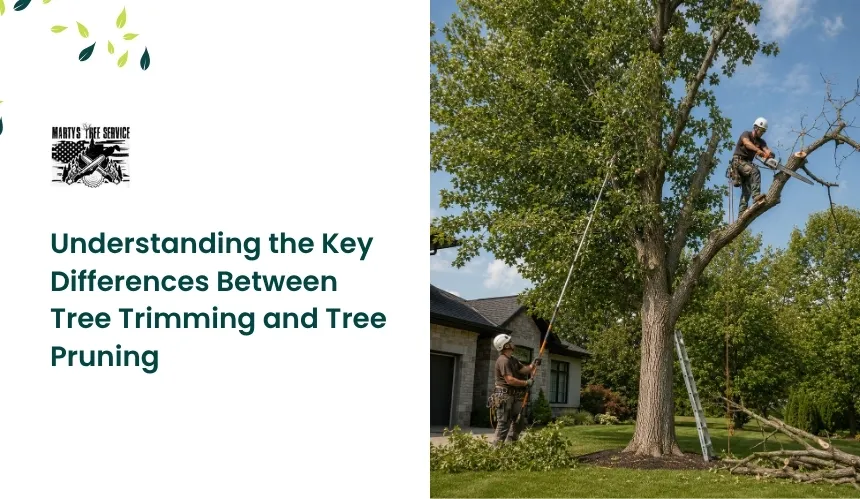
Understanding the Key Differences Between Tree Trimming and Tree Pruning
Tree trimming and tree pruning are often used interchangeably, but they serve different purposes in long-term tree maintenance. While both involve branch removal, the methods, timing, and goals behind each process can affect tree structure, growth behavior, and overall health in different ways.
According to arboriculture professionals, improper cutting techniques or choosing the wrong maintenance approach can weaken branch stability and increase vulnerability to disease or storm damage. Understanding the difference between trimming and pruning helps property owners make better decisions about seasonal tree care and landscape management.
This blog explains how tree trimming and tree pruning differ, when each service is typically recommended, and how both practices contribute to healthier and safer tree growth. It also covers the long-term benefits of proper maintenance and the risks associated with incorrect cutting methods.
1. What Tree Trimming Is Designed to Accomplish
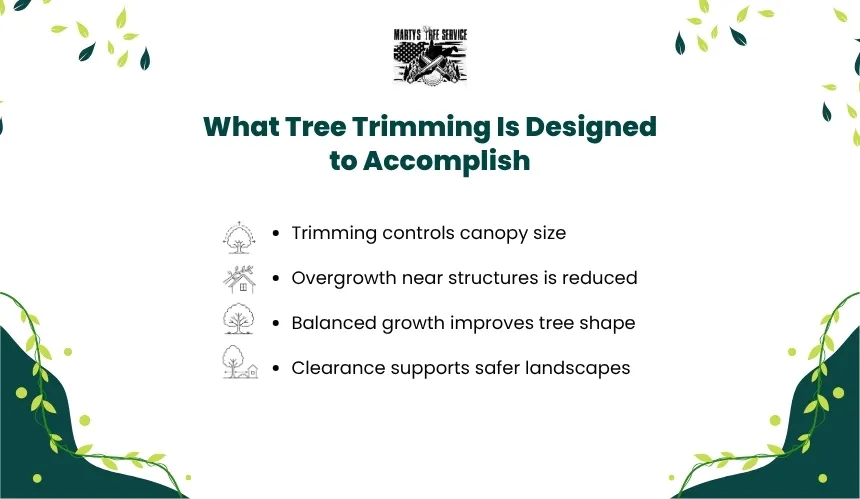
Tree trimming is primarily focused on controlling appearance, managing canopy size, and maintaining balanced growth across the tree. It is commonly performed to remove excessive overgrowth that may interfere with nearby structures, walkways, utility lines, or surrounding landscape areas.
This type of maintenance is often used to improve sunlight penetration and create a cleaner, more organized canopy shape. Regular trimming also helps reduce excess branch weight that may place additional stress on major limbs during storms or rapid seasonal growth.
Why is trimming commonly used for canopy management
Overgrown branches can gradually create uneven canopy development and reduce airflow throughout the tree structure. Trimming helps maintain more controlled branch spacing while improving visibility and overall landscape appearance.
Properties with trees near rooftops, driveways, fences, or parking areas often require periodic trimming to prevent branch interference. Controlled canopy management also helps reduce the likelihood of low-hanging limbs becoming hazardous over time.
When tree trimming may be recommended more frequently
Some tree species grow rapidly and require more frequent trimming to maintain balanced canopy development. Fast-growing trees may quickly extend branches toward structures or utility areas if maintenance is delayed for long periods.
Trimming may also be scheduled more often in areas affected by strong winds, storm activity, or dense seasonal growth. Routine maintenance helps prevent excessive overgrowth from creating structural stress within the canopy.
2. How Tree Pruning Focuses More on Tree Health and Structure
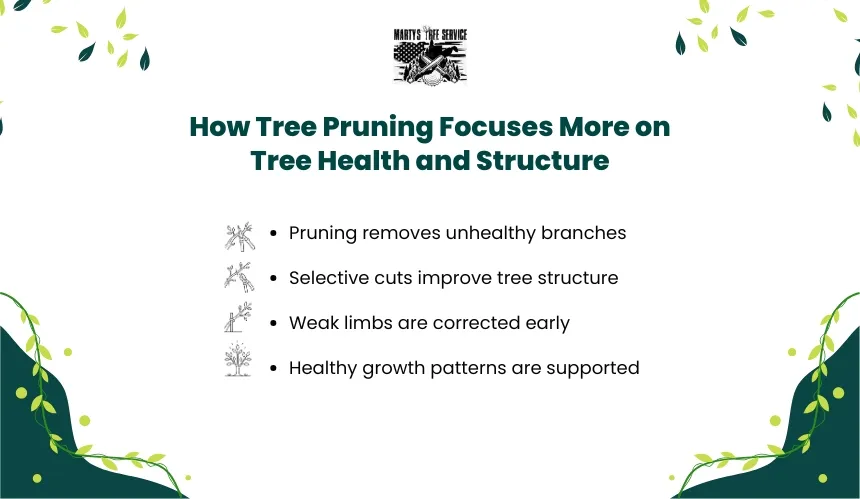
Tree pruning is typically performed to improve structural stability, remove unhealthy growth, and support long-term tree development. Unlike trimming, pruning is more selective and focuses on correcting issues that may affect the health or strength of the tree over time.
Professional pruning often targets diseased, damaged, weak, or poorly positioned branches that interfere with healthy growth patterns. Proper pruning techniques help trees develop stronger branch attachments while reducing the risk of decay, splitting, or structural imbalance.
Why pruning is important for long-term tree development
Selective pruning helps trees distribute nutrients more efficiently by removing branches that compete unnecessarily for energy and moisture. This process encourages healthier canopy growth while reducing stress across major structural limbs.
Pruning also helps improve branch architecture during early growth stages, allowing younger trees to develop stronger and more stable frameworks. Proper structural development can reduce future maintenance needs and lower the likelihood of storm-related damage.
What types of branches are usually removed during pruning
Pruning commonly focuses on branches that show signs of disease, internal weakness, decay, or poor directional growth. Removing these limbs early helps prevent structural problems from spreading throughout the tree canopy.
Some of the branches most commonly targeted during pruning include:
- Dead Branches: Lifeless limbs can weaken canopy stability and increase the risk of falling debris during severe weather conditions.
- Crossing Limbs: Branches rubbing against one another may damage bark surfaces and create openings for pests or fungal development.
- Weak Attachments: Poorly connected limbs are more vulnerable to splitting or failure as branch weight increases over time.
- Diseased Growth: Infected branches are often removed to help limit the spread of decay and protect surrounding healthy tissue.
3. When Trees Need Trimming vs When They Need Pruning
Although trimming and pruning both involve branch removal, the reason behind each service is usually very different. Some trees mainly require canopy control and appearance management, while others need corrective maintenance to address structural weakness or unhealthy growth.
Understanding the condition of the tree helps determine which approach is more appropriate. Choosing the correct service at the right time can improve long-term tree stability while reducing unnecessary stress caused by improper cutting methods.
Signs a tree mainly needs trimming
Trees often require trimming when branch growth becomes excessive or begins interfering with nearby structures and landscape areas. This type of maintenance is usually focused on managing canopy size, improving shape, and maintaining safer clearance throughout the property.
Some common signs that trimming may be needed include:
- Canopy Overgrowth: Excessive branch expansion can make trees appear uneven and overcrowded while reducing airflow throughout the canopy.
- Low-Hanging Limbs: Branches extending over walkways, driveways, or parking spaces may interfere with visibility and movement around the property.
- Structure Interference: Limbs growing too close to roofs, siding, fences, or utility lines can eventually create property damage risks.
- Blocked Sunlight: Dense canopy coverage may prevent nearby grass, plants, or landscape features from receiving adequate sunlight exposure.
Situations where pruning becomes more important
Pruning is generally more beneficial when trees show signs of disease, decay, weak branch development, or structural imbalance. The goal is usually to improve tree health and prevent long-term growth problems rather than simply reducing canopy size.
Selective pruning is commonly recommended in situations involving damaged limbs, crossing branches, or unhealthy growth patterns that weaken structural stability over time. Proper corrective pruning helps trees develop stronger branch attachments and healthier overall growth.
4. Why Understanding the Difference Helps Property Owners Choose the Right Service
Tree trimming and tree pruning may appear similar from a distance, but choosing the correct service depends on the condition of the tree and the goal of the maintenance. Trimming is generally used to manage shape and overgrowth, while pruning focuses more on structural correction and long-term health improvement.
Using the wrong approach may lead to unnecessary branch removal, uneven growth patterns, or increased stress across the canopy. Understanding how each service functions helps property owners schedule maintenance more effectively and avoid practices that may weaken tree stability over time.
When trimming may be the better option
Trimming is often recommended when trees begin extending too close to structures, utility lines, driveways, or surrounding landscape areas. It is commonly used to control canopy size and maintain a cleaner, more balanced appearance throughout the property.
Routine trimming may also help reduce excessive shade coverage and improve visibility around walkways or parking spaces. Trees with dense seasonal growth often benefit from periodic canopy management to prevent overextension and branch crowding.
When pruning becomes more important than trimming
Pruning is generally more beneficial when trees show signs of disease, weak branch structure, decay, or unhealthy growth patterns. Selective branch removal helps correct structural issues before they develop into larger safety or health concerns.
Professional pruning may also be necessary after storm damage or during early tree development stages, where branch structure is still forming. Corrective pruning supports stronger long-term growth and helps trees recover more efficiently from environmental stress.
Frequently Asked Questions
Can tree trimming and pruning be performed during the same service visit?
Many professional tree care companies perform trimming and pruning together when trees require both canopy management and structural correction. The approach depends on the tree’s condition, growth pattern, and whether the focus is appearance, health improvement, or hazard reduction.
Does pruning help young trees grow better in the future?
Pruning during early growth stages helps guide branch development and improves structural formation as the tree matures. Corrective pruning can reduce future imbalance issues and encourage stronger branch attachments that support long-term canopy stability.
Why do some trees recover faster after pruning than others?
Recovery speed often depends on tree species, overall health, seasonal timing, and the amount of foliage removed during maintenance. Healthy trees with proper nutrient access and balanced root systems usually heal more efficiently after branch removal.
Can trimming or pruning affect how much shade a tree provides?
Both services can influence shade coverage because removing branches changes canopy density and sunlight penetration. However, proper maintenance is typically designed to preserve healthy shade distribution while improving airflow and reducing excessive overgrowth.
Is there a difference between decorative pruning and structural pruning?
Decorative pruning focuses more on appearance and shaping, while structural pruning is intended to improve branch stability and long-term growth patterns. Structural pruning is commonly used to correct weak limb development and reduce future safety risks.
Why is topping considered harmful for many trees?
Tree topping removes large portions of the canopy in ways that can weaken natural growth structure and encourage unstable regrowth. This practice may increase vulnerability to decay, pest activity, and branch failure compared to controlled trimming or selective pruning methods.